Spell It
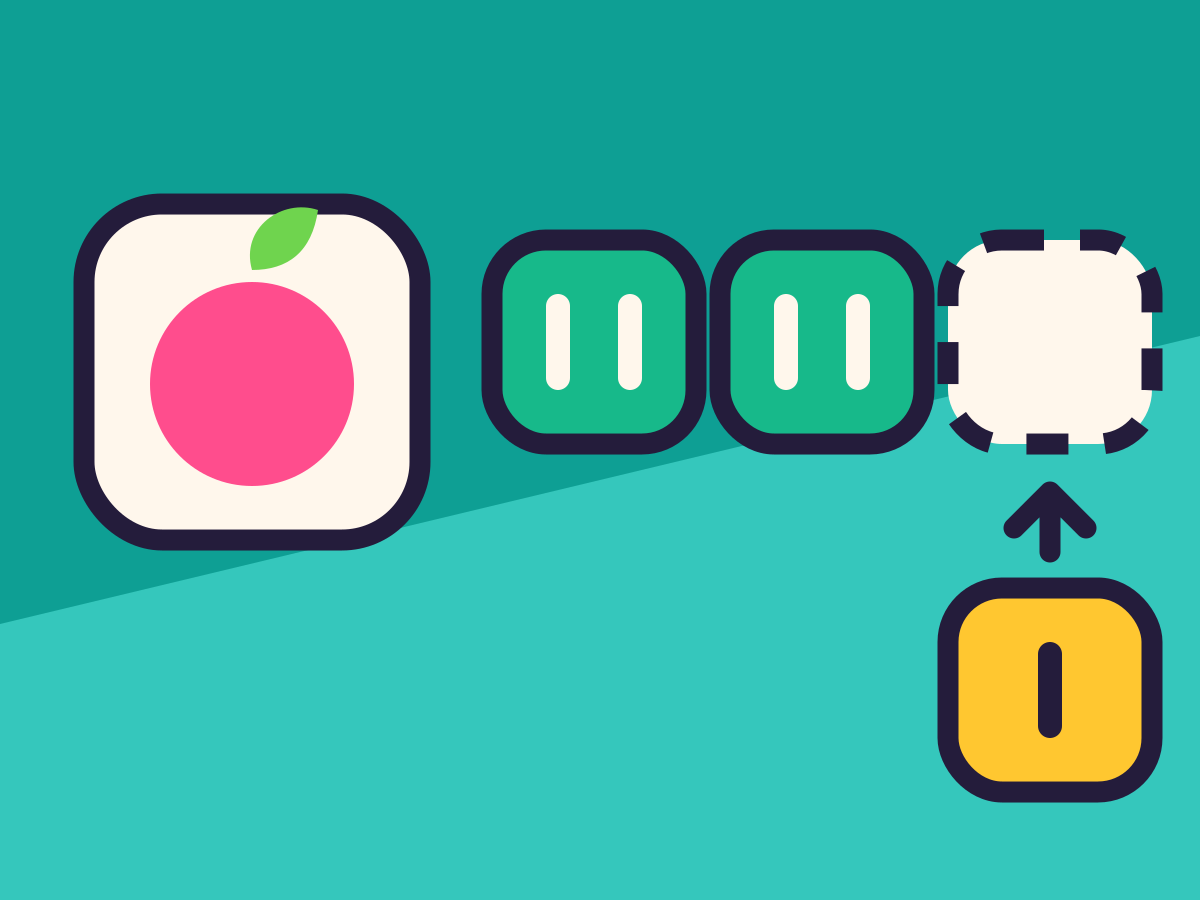
A picture appears and the child builds its whole name out of letter tiles. A wrong tile is never placed, so the word on screen is correct at every moment. 67 pictures, three levels, and a hint button that fills the next letter whenever it is wanted.
- Free
- No ads
- No account
- No download
- Works offline
- Single player
How do you play?
- Look at the picture - The word is never written anywhere. Under the picture is one empty box per letter, so the length of the word is known before the first tile lands.
- Tap the letters in order - The first letter first. A right tile drops into its box; a wrong one shakes and dims, and can be tried again at the next letter, where it may well belong.
- Press the hint when it stalls - It fills the first letter still unknown and hands the rest back. Hinted letters are drawn in a paler colour, so a grown-up can see afterwards which ones were given.
- Change the alphabet, not the app - The buttons under the game switch which language is being spelled. The menus stay in the language they were in.
About this game
A picture, and one empty box for every letter of its name. Tap the tiles in order. That is the game.
The tray refuses a wrong letter. Tap one and it wobbles, dims, and stays exactly where it was, so the row of boxes above is always right as far as it goes. That single decision is why this works at four rather than at six. A child who fills in five letters and is then told the whole word is wrong has learned nothing they can act on, because nobody can point at which letter did it. Here the mistake is answered the instant it happens, at the one letter it concerns, and the picture never goes away.
Easy draws from 38 of the 67 pictures, the ones whose English name runs to four letters or fewer, and the tray holds nothing but the word's own letters. Nothing to reject, only an order to find. Medium mixes in two wrong letters and opens words up to six long, and hard takes the whole list, up to a nine-letter chocolate, with four wrong letters in the tray.
The hint fills the first letter still missing. Press it as often as it takes. It is never rationed, because a hint a child has to earn is a hint they cannot reach at the exact moment they are stuck, and a four-year-old who is stuck with no way forward closes the tab.
The honest part. Easy is forgiving by design, and the measurement says how forgiving: a player tapping tiles completely at random finishes an easy word in about 5.9 taps, against an average word length of 4.67 letters. That is roughly one wrong tap per word. The same blind tapping costs 18.2 taps at hard. So easy is close to a guess for a child who has stopped looking, which is the price of a level a beginner can actually finish, and it is worth moving up once the words start coming quickly.
What does it teach?
Sounds to letters
The child hears the word in their head and looks for the letter that makes each sound. That mapping is the whole foundation of both reading and writing, and it is practised here one letter at a time.
Order, not just recognition
Knowing every letter of a word and knowing what order they come in are two different pieces of knowledge. Easy mode isolates the second one completely.
Word length
The empty boxes are visible from the start, so a child learns that a word is a fixed number of letters long before they can count them out for themselves.
A second alphabet, painlessly
Hebrew, English and Spanish are switchable inside the game. Spelling the same picture in a second language is one of the cheapest ways into it.
Tips
Say the word slowly, out loud
Stretch it. Buh-ann-ann-ah. Hearing where one sound ends is most of spelling at this age, and it is far more useful than pointing at the tray.
Start on easy even if they read
With no wrong letters in the tray the task is pure ordering, which is a different skill from rejecting a letter that does not belong. A child who reads fluently can still be slow at it.
Let the hint take the dull letters
Silent letters and doubles are memory, not sound. Hinting the second r in perro and letting them find the rest keeps the run moving and costs nothing.
Watch the first letter, not the score
The moment worth noticing is when they stop scanning the whole tray and go straight for the opening letter. That is the skill arriving, and it happens weeks before the record does.
What age is it for?
Four and five
Easy only, and with a grown-up naming the picture out loud. Expect heavy hint use for a while. That is the hint working rather than the child failing.
Six and seven
Medium is the level that fits, with its two wrong letters to rule out. Most children at this age start refusing the hint on their own, which is worth letting them do.
Eight and up
Hard, or the same game in a language they are learning at school. Nine-letter words with four decoys in the tray are a real task for an adult in an unfamiliar alphabet.
Accessibility
Every letter is a tap on a target of at least 52 pixels, and nothing here needs a drag, a swipe, or a sustained press. There is no clock and no way to lose, so a child who stops halfway through a word loses nothing by taking a minute. Sound is optional throughout: the speaker button says the word aloud for anyone who wants it, and the game is complete with the volume off.
Playing together
Name the picture first
Say what it is before they start. It removes the one genuine unfairness in the game, which is a picture the child calls something else.
Take alternate letters
You take the odd ones, they take the even ones. It halves the effort on a long word and keeps a tired child in the game.
Ask for the word afterwards
Once it is spelled, cover the screen and ask how it started. Recall a few seconds later is worth more than the spelling itself.
Common questions
Is the spelling game free?
Yes, and there is nothing to buy inside it. No account, no download, and it keeps working with the connection off.
Does my child need to read already?
No. They need to know the letters and to know what the picture is called. Reading a whole word is what this game leads towards rather than what it asks for.
What if they call the picture something else?
Then their answer is right in their head and wrong on the screen, and no game can explain that gap. Say the word out loud before they start. It is the one place an adult genuinely matters here.
Can they spell in a language other than the menus?
Yes. Hebrew, English and Spanish each have their own tiles and their own record, and the buttons under the game switch between them without changing the interface.
Does using the hint cost anything?
No. It counts hints so a grown-up can see how much help a run needed, and the word still counts when it is finished. Nothing is deducted and nothing is locked.
What does the record count?
Words spelled in one run, kept separately for each level and each language. It resets when a run starts and never goes down.
Is there a timer?
There is not. Nothing on the screen moves on its own, and a word can sit half finished for as long as it needs to.